How Carmel-by-the-Sea Street Addresses Affect Closing
September 3, 2026
September 3, 2026
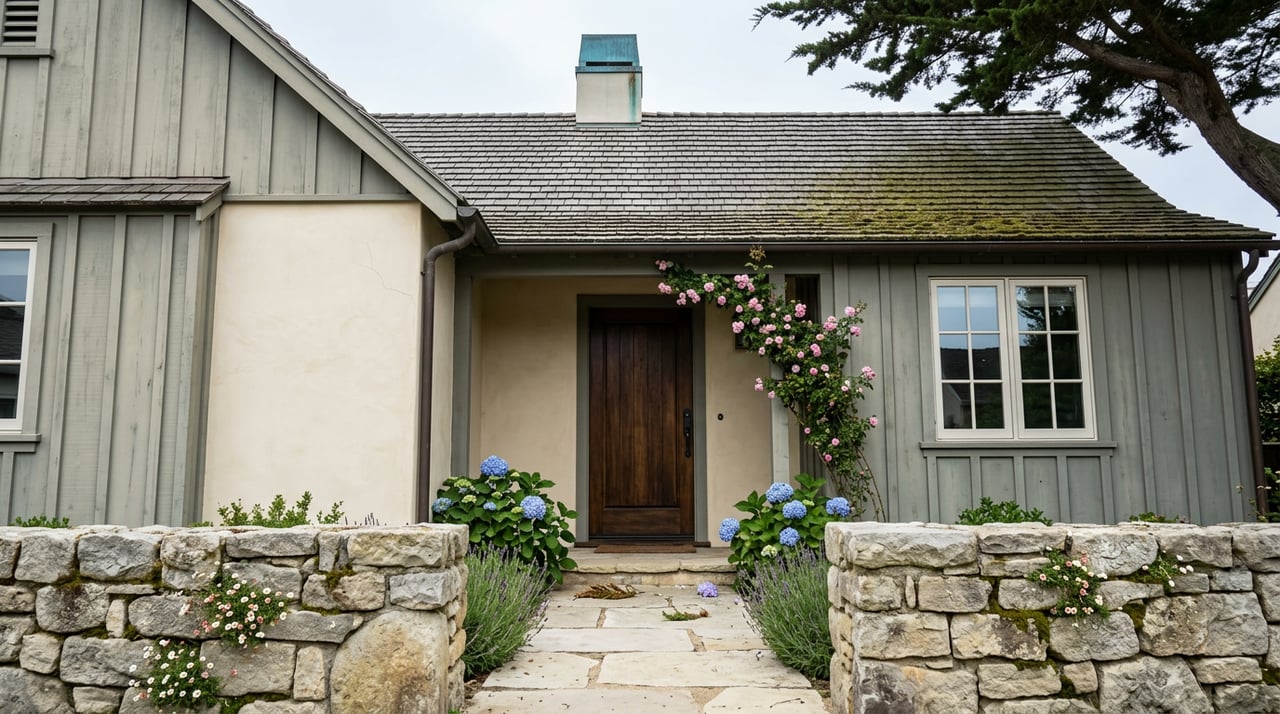
For most of the last hundred years, giving someone directions to a home in Carmel-by-the-Sea meant counting houses from the nearest cross street and hoping you counted right. One longtime resident described her own address to a public radio reporter as living on Monte Verdi Street, "one northeast of Third." The trouble is that the count changes depending on whether you include the corner house that doesn't actually face Monte Verdi. That kind of ambiguity was the system, and it worked, mostly, for over a century.
This year it changed. The Carmel City Council voted unanimously last fall to assign every home and business in the village a standard street number for the first time in Carmel's 110-year history, and numbers went up on buildings starting this spring. If you're buying or selling a Carmel property in 2026, you're closing during the exact window when the paperwork, the mailbox, and the county record are still catching up with each other. Here's what the new addresses actually change, what they don't, and where the gap between the two can catch a transaction that looks routine on paper.
Carmel's resistance to street numbers goes back further than most people realize. When California proposed legislation in 1953 requiring every municipality to assign addresses, Carmel was reportedly incensed enough to threaten seceding from the state. Instead of numbers, homeowners gave their cottages names like Merry Oaks, Bluebird Cottage, and Oceans End, and residents relied on directional descriptions to tell people where they lived. A resident describing the Carmel Woman's Club, for instance, would say it sits at the southwest corner of San Carlos and 9th, not at a street number.
That system had a real cost as the town aged. More than half of Carmel's roughly 3,200 residents are over 65, and address advocates on the council argued the lack of numbers put an aging population at risk if emergency responders from outside the immediate area couldn't find a home quickly. Council Member Jeff Baron, who had pushed for addresses since 2021, put the case for change simply: "We can't keep closing ourselves off to the world and the internet."
The vote gave Carmel's Community Planning and Building Department authority to assign a numbered address to every property, and the rollout has been deliberate rather than immediate. The city's own FAQ, updated as recently as May 2026, instructs property owners not to post their new number until they've received an official notice, and it's the Planning and Building Department, not the post office, that owns the assignment process. The stated goals line up with California building and fire code requirements, which typically call for a standardized address to support permitting, homeowner's insurance documentation, and emergency dispatch.
That's the part that gets covered in most of the coverage of this story. It's also the part that matters least if you're the one sitting in escrow right now.
Here's the detail that catches people off guard mid-transaction: getting a street address did not get Carmel home mail delivery. The city has explicitly kept those two issues separate. Its FAQ states plainly that at-home mail delivery will not be implemented, that the existing centralized PO Box system continues as the only standard mail delivery in the city, and that the city has no intention of asking USPS to change that. There are reportedly more than 4,000 postal boxes serving a town of roughly 3,200 people, because a PO Box has always been the price of living here, not an optional convenience.
For a new owner, that means the numbered address on your closing documents solves one set of problems and leaves another completely untouched. A standardized street number now satisfies homeowner's insurance underwriting, permit history pulls, and applications for things like a Real ID or passport, all of which used to require extra documentation or a frustrating phone call explaining that yes, the house is real, it just doesn't have a number. What it does not do is put mail in a box at your front door. You still need to apply for your own PO Box, and property owners are asked to show proof, typically a current tax bill, which must be renewed annually.
| Task | Before this year | Now |
|---|---|---|
| Mail delivery | PO Box pickup only, no home delivery | PO Box pickup only, no home delivery, unchanged |
| Homeowner's insurance application | Directional description often required extra follow-up | Standardized street number accepted directly |
| Opening a bank account | Frequently required manual explanation, sometimes declined | Street address usable on standard forms |
| Permits, Real ID, passport applications | Extra documentation often needed | Standard numbered address now accepted |
| Package delivery from carriers unfamiliar with the village | Relied on house-name signage and driver experience | New address helps, but signage is still the practical backup |
A handful of steps make the difference between a smooth close and a string of follow-up calls after you already have the keys.
If you want a fuller walkthrough of how Carmel escrow typically moves from offer to recording, including inspection timing and closing disclosure deadlines, our Carmel-by-the-Sea escrow guide covers the standard process this new address wrinkle sits on top of.
What makes this story worth understanding, rather than just noting in passing, is that Carmel didn't trade one system for the other. The village kept its house names, its post office ritual, and its resistance to becoming what one council member called Anywhere, USA, while still solving the specific problems that were actually costing residents time: insurance forms, bank accounts, and emergency response. A buyer closing on Merry Oaks or Bluebird Cottage this year walks away with both, a numbered address that satisfies the paperwork and a name on the gate that still means something to the neighbors.
That's the kind of detail that only shows up when you're paying attention to a market this small and this particular, not reading it off a national checklist. If you're weighing a purchase or a sale in Carmel-by-the-Sea this year and want a closing process that accounts for exactly this kind of local wrinkle, Maria Finkle and her team can walk you through it from offer to recording. Request your complimentary home valuation to start the conversation.
Stay up to date on the latest real estate trends.
Our team is renowned in the Real Estate community for consistently going the extra mile throughout every transaction. With a deep and unwavering passion for the industry and our clients, they take immense pride in exceeding client expectations. Their expanding customer base stands as a testament to their relentless focus on fulfilling client wants and needs, always putting them at the forefront of every endeavor.